Sell a Hoarder House or Junk Property — We Buy It As-Is, Belongings and All
You don't empty the rooms. You don't clean anything. We see the property, we write an offer based on what we see, and you decide what to do with it.
What It Means to Sell a Hoarder House Without Touching a Single Room
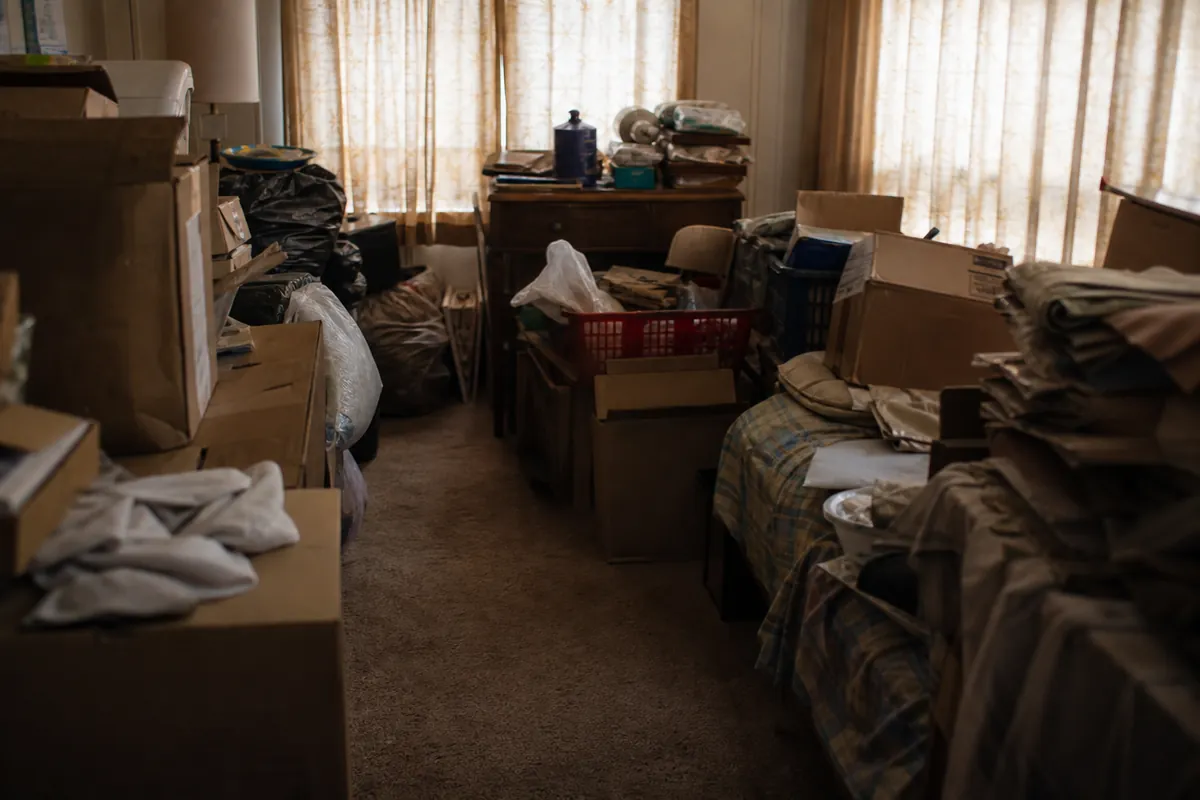
When you need to sell a hoarder house, the first obstacle most buyers put in front of you is the house itself. Conventional buyers can't finance a property in severe accumulated condition. Most investors won't quote a price until it's been cleared. Cleanup estimates arrive before any offer does — and they're large enough to stop the sale before it starts.
We buy the property in the state it's in today. Furniture, boxes, accumulated belongings, years of material — you leave what you want to leave. The written offer we make reflects the house we actually walked through, not a version of it that someone else cleaned up first. The offer is grounded in what we saw, and you don't need to change anything to make the number honest.
We completed a full rehabilitation at 5056 S Packard Ave — on the same street as our Cudahy office — that included clearing a hoarder unit. That project is checkable: the address is real and the work happened. Call us and we'll set a time to come see your property.
How the Purchase Works When Your House Is a Junk House
Selling a junk house to us follows the same order of events as any purchase we make. The condition of the property doesn't change the steps — it changes what the offer reflects.
You reach out first. You tell us what you have and where it is. We schedule a walk-through at a time that works for you — not to judge the state of the property, but to see it accurately so the offer we make is real.
We come to the property in person. You don't move a single item before we arrive. We've bought properties that included hoarder clearance before. What we see is what we price.
After the walk, you receive a written offer. You have no obligation to accept it, and there's no pressure to decide on the spot. Take the time you need and ask every question you want answered.
If you accept, you choose the closing date. You take what matters to you and leave the rest. Unwanted belongings, furniture, and personal items can stay — that's built into what we're buying.
The offer commits us to the property as we found it. That's the version of the house we're purchasing — accumulated condition and all.
The Real Concern When You Try to Sell a Hoarder House
The hesitation most people carry into this conversation isn't the paperwork. It's this: you've heard about buyers who quote one price and come back with a lower number before closing once a contractor has walked through. That concern is legitimate, and you should raise it with any buyer you talk to — including us.
Here is what we can tell you plainly: we see the property before we write the offer. We don't price a hoarder house from photos or a drive-by. We go inside, we see what's there, and then we put a number in writing. The offer already accounts for the condition we observed — not a sanitized version of the property.
You should also understand what selling as-is means legally in Wisconsin. It means you won't make repairs — it does not mean you skip the paperwork. Sellers of residential property must complete a Real Estate Condition Report disclosing known defects within 10 days of an accepted offer. That form tells the buyer what you know. It doesn't require you to fix anything.
If you inherited the property and never lived in it, the picture can look different. Personal representatives, trustees, and fiduciaries appointed by or supervised by a court who never occupied the property are often exempt from filing the condition report altogether. We'll walk through what applies to your situation.
You won't be pressured on the call. The offer comes with no obligation to accept, and the conversation is honest on both sides — a no-pressure exchange to work out whether this makes sense for both of us.
Why a Hoarder House in the Milwaukee Metro Becomes Urgent to Sell
A hoarder or junk house doesn't stay static in Wisconsin. A property with severe accumulated neglect — blocked egress, structural damage, moisture intrusion, pest activity — can reach the point where a municipality's building inspector may order it repaired or razed. Under Wisconsin Statutes s. 66.0413, that order can be issued when a building is found to be dangerous, unsafe, unsanitary, or otherwise unfit for human habitation.
The statutory threshold is specific: when the cost to repair a property would exceed 50 percent of its assessed value, the repairs are presumed unreasonable under state law — and the municipality may move toward razing rather than waiting for the owner to act. That's the formal version of 'costs more to fix than it's worth,' written into the statutes with a number attached.
If the owner doesn't comply, the municipality may carry out the demolition itself and charge the cost as a lien against the property. That lien compounds. Where razing costs are folded into the amount owed, a county's in rem tax foreclosure timeline can shorten significantly from the standard two-year window. The condition that makes a house hard to sell is the same condition that accelerates its legal exposure.
Selling the hoarder house now — in its current state, to a buyer who has actually walked through it — stops that clock. The legal exposure attaches to ownership; once the sale closes, you're no longer the owner.
What This Service Covers and What It Doesn't
We buy hoarder and junk houses that are residential — single-family homes and buildings up to four dwelling units. That covers most of the problem properties we see across the Milwaukee metro: the inherited house packed floor to ceiling, the long-term rental left in accumulated condition, the family home where no one has been through the rooms in years.
What you don't need to do before we close:
What we do need from you:
We serve Cudahy and the surrounding Milwaukee metro: Milwaukee, West Allis, Greenfield, Wauwatosa, Oak Creek, South Milwaukee, St. Francis, Brookfield, Franklin, Greendale, New Berlin, Waukesha, and surrounding communities.
We don't buy commercial or industrial properties. If you're uncertain whether your property qualifies, call and describe it — we'll tell you straightforwardly.
- Empty or clear any room in the property
- Clean, deodorize, or arrange professional remediation
- Make repairs or correct code violations before the sale
- Remove furniture, appliances, or personal property you don't want to take
- Access to walk through the property in person before we make an offer
- A completed Real Estate Condition Report disclosing known defects, as Wisconsin law requires after an accepted offer
What Puts a House in This Situation
Hoarder and junk houses arrive at the point of sale through a handful of recurring circumstances. If your situation is one of these, the property can be sold exactly as it stands.
Whatever brought the property to this state, you don't need to change it before we make an offer. The offer we make is based on the house we see — that's the commitment, and it holds whether the house is full or empty when we walk through.
- A family member with a hoarding disorder lived in the property for years. The accumulated condition is severe enough that the house can't be shown to conventional buyers, financed, or insured in its current state.
- You inherited the property already in this condition. You live too far away to address it yourself, and paying for clearance and remediation before any offer arrives isn't financially feasible.
- A long-term tenant left the property packed with debris and personal items the owner never anticipated and is not in a position to clear.
- The house sat vacant for years — accumulating moisture damage, pest activity, and whatever previous occupants left behind.
- The property carries open code violations, an inspection order, or the early stages of a municipal raze proceeding. Its condition makes a conventional sale structurally impossible.
- The house is tied to a divorce or an estate where neither party can finance remediation and both need to move forward.
Frequently Asked Questions
Do I need to empty or clear the house before you'll come see it?
Can I leave furniture and belongings in the house when we close?
My house has active code violations tied to its condition. Does that prevent the sale?
Wisconsin requires a condition report even on an as-is sale. What does that look like when I'm selling a hoarder house?
What if the inside is far worse than I've described on the phone?

Tell us about the property
Tell us what's going on and we will follow up about your property.
We also buy houses in these situations
- Sell a House As-Is — No repairs, no cleaning, no inspections to pass — we buy the house in its current condition.
- Sell an Inherited House — For families who inherited a property they cannot keep, maintain, or agree on.
- Sell a House With Tenants — Landlords selling an occupied rental — including tenants who are behind or difficult.
- Selling a House in Divorce — A clean, fast sale when two people need to separate the asset and move on.
- Sell a House in Foreclosure — For Wisconsin owners facing foreclosure who need certainty before the sheriff's sale.
- House With Delinquent Property Taxes — Back taxes owed on the property, settled at closing.
- Condemned Houses & Code Violations — Orders from the building inspector, open violations, or a condemned property.
What customers say
Reviews from Cudahy and the Milwaukee metro, Wisconsin customers
We inherited a house that needed far more work than we were prepared to handle, and we didn't live nearby. The owner walked through the property, explained what the repairs would realistically cost, and was honest that we might receive more by fixing it and listing it ourselves. There was never any pressure. We chose the cash offer because we could leave the house as it was and be finished with the entire situation. Everything happened when they said it would, and the closing was much easier than we expected.
I had owned this rental for years, but it reached the point where the repairs and tenant issues were costing me more time than I wanted to give it. I spoke with several buyers, and they were the only one who gave me a clear explanation of how they arrived at the offer. They didn't make a high promise over the phone and then try to lower it later. The price wasn't retail, but it was fair for the condition and the convenience of selling it as-is. The closing went smoothly, and I'm relieved to have the property behind me.
Ready to find out what your house is worth to us?
Tell us about the property and we will make a cash offer. No listing, no repairs, no fees.